RedBear · classic Rust 2015 · v1069
What is Rust Legacy
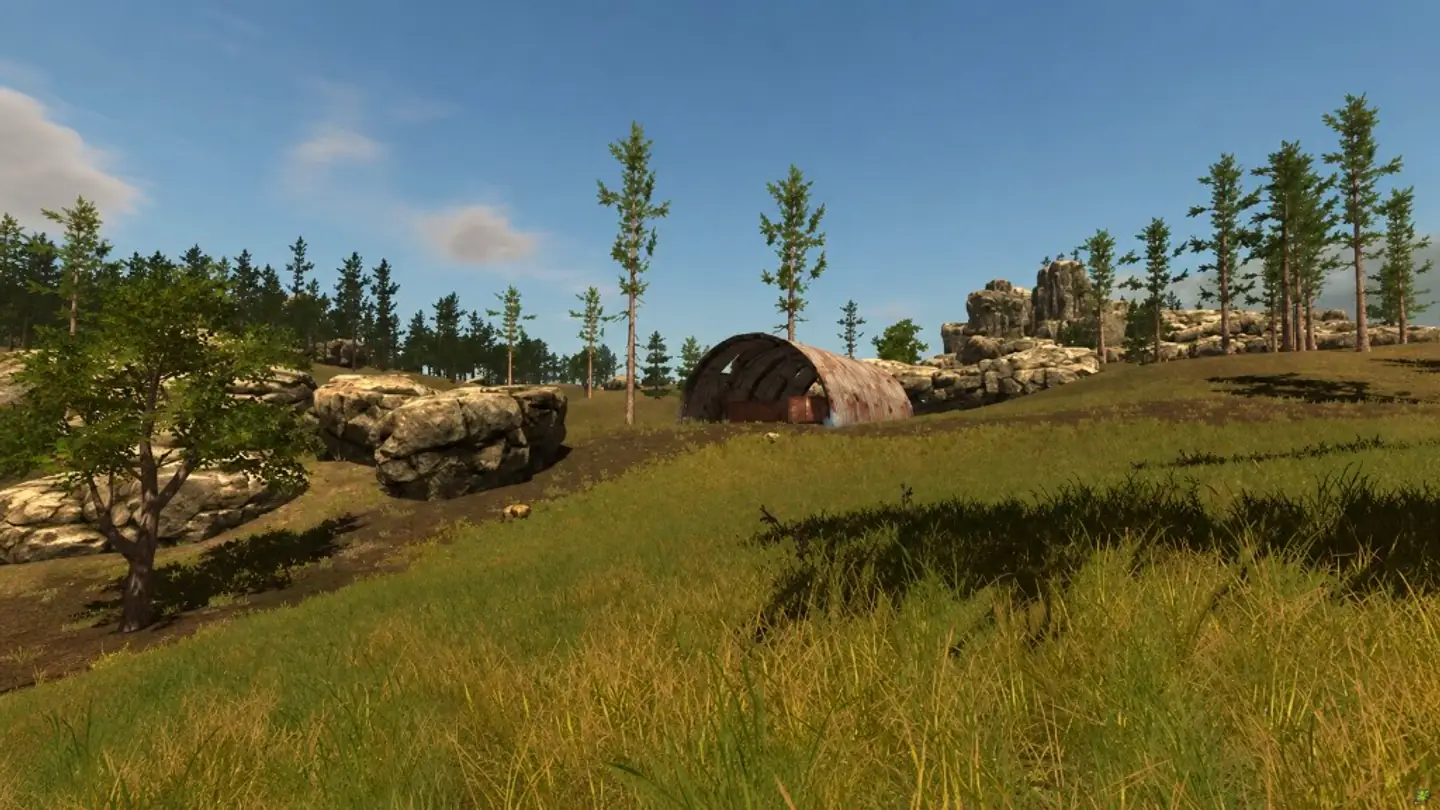
Rust Legacy is Rust as it was before the game was rewritten from scratch. One shared island, the familiar radtown and hangar, crafting without components and raids built around C4. It left Steam in December 2016, but this is the version that won the game its first large audience.
- 2013 Early access and the first island
- 2014 Peak popularity: around 59,000 players
- 2015 Final build v1069
- 2016 Removed from Steam
A separate game, not a mode
You cannot switch modern Rust into Legacy. Different engine, different map, different models, different economy — two distinct games sharing a name.
When people say Legacy they almost always mean the final v1069 build from March 2015. Preserved clients, server mods and the community all revolve around it.
An island you know by heart
The map is the same for everyone: Resource Road, Hacker Valley, radtown, the hangar and a scattering of small towns. You learn the landmarks in a couple of evenings, and after that the game is about people, not navigation.
Building is simple: foundations, walls, stairs, metal doors and code locks. There is no cupboard and no upkeep — a base survives on how well it is hidden and how many people defend it.
Crafting and raids
Progress is linear: wood, stone, metal, then weapons and explosives. No scrap, no components, no three tiers of workbench — everything comes down to gathering and time.
C4 and the M4 sit at the top of the tree rather than inside a crate. That makes a raid an event: it takes days to prepare, and losing a sulfur stockpile genuinely hurts.
Why people still play it
A 2015 game runs on almost any computer and does not ask you to track ten interlocking systems. The barrier is low and conflict starts within minutes.
For many it is also a way back to a specific period: the same sounds, the same interface, the same island. Modern Rust has moved far ahead, but it cannot reproduce that feeling.